
Last month I opened a brand-new Pinterest account. By the end of the month, it had 19,000 views.
It made zero sales.
A few years ago that view count would have made my week. Back then I was pinning women’s dress outfits, linking them to Amazon, and earning nothing. Three months of pinning brought me $0, and Amazon closed my Associates account because I never reached three sales.
My second try went better. I earned about $300 over three months from fashion pins. Same niche, same kind of pins. So this post is about the part that confused me most: why some pins sell, and others don’t, even when the numbers look great.
The short answer
Pinterest can sell fashion affiliate products. But views and sales are two different things, and Pinterest will happily show you a big view number that means nothing for your earnings.
In my experience, the pins that sold weren’t always the pins with the most views. Some pins got very few views and still made a sale. Others got thousands of views and sold nothing. The biggest factor I noticed was the trend: whether the outfit in the pin matched what women were looking for right then.
What I pinned
I stuck to one lane: women’s fashion, mostly dress outfits.
Every pin linked straight to the product page on Amazon. No blog post in between, no landing page. Someone saw the outfit, tapped the pin, and landed on Amazon.
On my first attempt, I also put links on a Blogger blog. That blog didn’t bring me sales. Pinterest is where the views came from both times, so that’s where I put my effort the second time.
What sold and what didn’t
This is the part I wish someone had told me before I started.
I used to look at my Pinterest analytics, see a pin with thousands of views, and think I was about to get paid. Then I’d check Amazon and see nothing. Meanwhile, a quiet pin with a small view count would bring in an order.
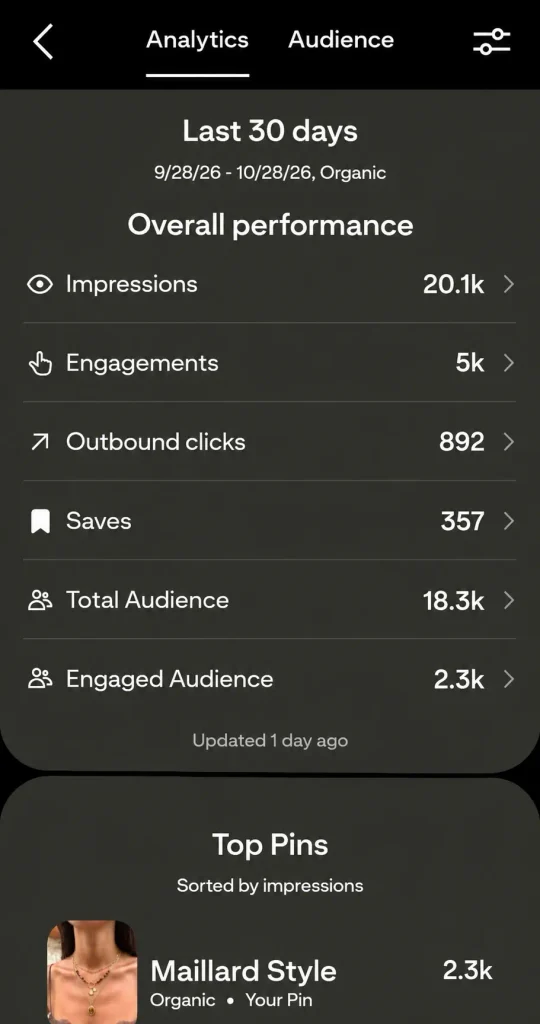
After watching this happen again and again, here’s how I read it now:
- A view on Pinterest only means your pin showed up on someone’s screen. They may have scrolled right past it.
- A sale needs the person to want that exact dress, at that price, right now.
- Trends decide the “right now” part. A dress style that’s popular this month can be dead next month, and the pin keeps getting views from people who are only browsing.
So when I review my pins, I look past views. Pinterest analytics shows outbound clicks separately from impressions, and Amazon’s reports show orders. Those two numbers tell me far more than the big view count at the top of the screen.
The 19,000 views that earned nothing
My newest account is the clearest example. 19,000 views in its first month, zero sales.
I’ll be honest: I don’t know the exact reason yet. The account is new, and I’m still watching which pins get clicks and which only get seen. What it proved to me is the same lesson from before. Views feel like progress, but you can’t spend them.
If you’re starting out and your views are climbing with no sales, you’re not alone. It doesn’t automatically mean you’re doing everything wrong, and it doesn’t mean money is around the corner either. Look at clicks, then look at what’s actually trending.
My biggest mistake: ignoring the Amazon clock
On my first attempt, I didn’t take Amazon’s rules seriously enough.
When you apply to Amazon Associates, you have 180 days to refer qualifying sales through your affiliate links. Once you refer three qualifying sales, Amazon reviews your application. If you don’t reach that number within the 180 days, your application can be withdrawn. Amazon explains this on its Associates help page about account dormancy. Rules like this change, so check the current page before you start.
I spent three months pinning and earned nothing, and when the window ran out my account was closed. That cost me months of work with no account to show for it.
How to set up fashion pins that link to Amazon
This is the simple setup I use. Nothing fancy.
Pick one narrow lane
I chose women’s dress outfits. Narrow is easier. Your boards, your pins, and your Amazon links all point at the same kind of shopper, and Pinterest gets a clearer idea of who to show your pins to.
Make the pin about the outfit
People on Pinterest are looking for ideas: what to wear to a fall wedding, a beach vacation, a work dinner. Write your pin title the way a woman would type it into the search bar, not the way Amazon names the product.
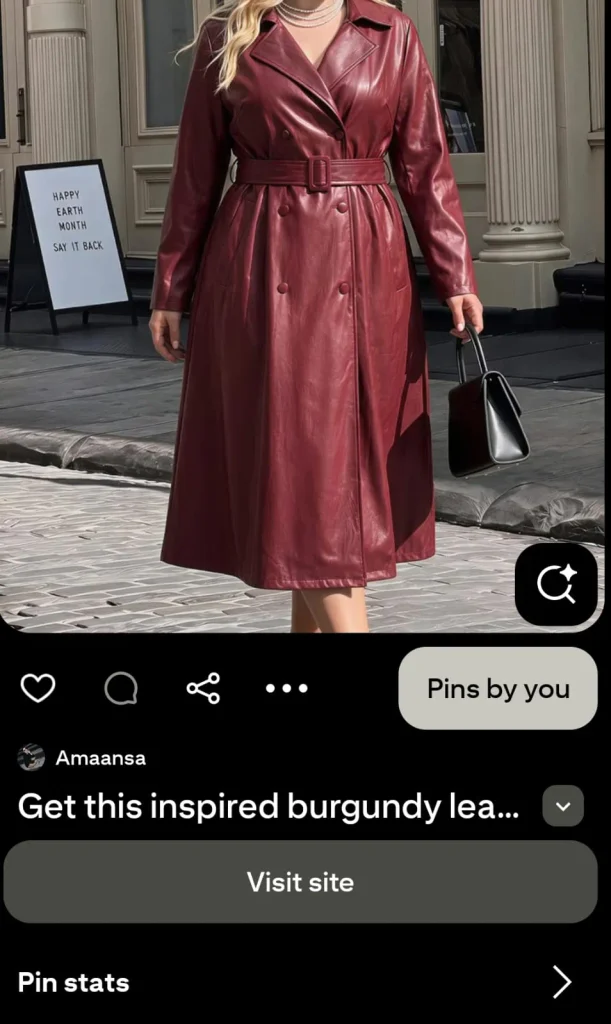
Paste the full Amazon link
Put your Amazon affiliate link straight into the pin’s destination link. Don’t run it through a link shortener. Pinterest’s community guidelines on affiliate links ask that people can tell where a link goes, and shorteners hide that. After publishing, tap the pin once to make sure it opens the right product.
Disclose on every pin
Make the affiliate relationship clear on every pin that has an affiliate link. A short line in the description works, such as: “Affiliate link. As an Amazon Associate, I earn from qualifying purchases.” The FTC expects disclosures that people will actually notice, and Amazon asks that its Associates statement be connected to your account on social media too. The FTC’s Endorsement Guides FAQ explains the rules in plain language.
Check clicks and orders every week
Open Pinterest analytics, sort by outbound clicks, and compare that with your Amazon orders. Pins that get clicks but no orders might be pointing at a product people don’t want once they see the price. Pins that get views but no clicks probably aren’t matching what people are searching for.
What I’d do if I started today
- Read Amazon’s 180-day rule before making a single pin, and mark the deadline on a calendar.
- Pick one fashion lane and stay in it for months, not weeks.
- Pin what’s trending now, and keep an eye on which styles are starting to fade.
- Stop celebrating views. Track outbound clicks and Amazon orders instead.
- Put the disclosure on every pin from the start, so you never have to go back and fix old ones.
- Expect slow months. My first three months made $0, and my newest account made $0 from 19,000 views.
About the $300: that’s what I earned on my second try, and it isn’t typical or guaranteed. Plenty of people pin for months and earn less. Some earn more. Your niche, the trends, and Amazon’s rules at the time all play a part.
I haven’t tried sending Pinterest traffic to a blog post first and then to Amazon on my second attempt. I went straight to Amazon both times. So I can’t tell you which works better yet.
If you haven’t joined Amazon Associates yet or you’re not sure where to begin, read how I started affiliate marketing with no money. It covers the $0 setup I used before any of the pins in this post.
