
Compare the best high-ticket affiliate programs for 2026, with verified commissions, cookie windows, approval tips, and a plan to land your first $100+ sale.
If you’ve been promoting affiliate products for a while, you know how it feels to drive hundreds of clicks and earn a few dollars in commission. The problem usually isn’t your traffic. It’s that you’re promoting products that pay too little per sale. In this guide, you’ll discover the best high-ticket affiliate programs for 2026, how to choose the right one for your niche, and the strategies affiliates use to close sales worth $100 to $1,000+ each.
Key Takeaways
- High-ticket affiliate programs are partnerships that pay large commissions per sale, typically $100 or more, for promoting premium products such as software, courses, financial services, and luxury goods.
- Recurring commission models often outearn one-time payouts over time because the affiliate is paid every month or year the referred customer stays subscribed.
- SaaS, web hosting, financial services, online education, and B2B services are the most consistently profitable niches for high-ticket affiliate marketing.
- Program selection should weigh commission size, cookie duration, product quality, approval requirements, and the strength of the affiliate support team.
- High-ticket sales depend on trust, so in-depth reviews, tutorials, comparisons, and email nurturing convert better than quick product mentions.
- Approval criteria are usually stricter for high-ticket programs, so affiliates benefit from building a niche-focused audience before applying.
- Legitimate high-ticket programs are free to join; any “high-ticket system” that requires a large upfront payment or recruiting others is a red flag.
What Are High-Ticket Affiliate Programs and How Do They Work?
High-ticket affiliate programs are affiliate partnerships that pay large commissions per sale—typically $100 or more—for promoting premium products such as software, online courses, financial services, and luxury goods. The mechanics are identical to any affiliate deal: you share a tracked link, a buyer purchases, and the brand pays you. What changes is the size of each payout. (New to the model? Start with How to start affiliate marketing
What Counts as a High-Ticket Affiliate Commission?
First, set a clear threshold, because “high-ticket” is used loosely online. In this guide, a program qualifies only if a single referral can realistically earn you $100 or more, with the strongest programs paying $300 to $1,000+. For example, a 4% commission on a $500 gadget pays $20, which is not high-ticket, while a flat $200 bounty on a hosting plan is.
How Commissions, Cookies, and Managers Work
Moreover, every program has four moving parts you should understand before applying:
- Commission model: A one-time bounty pays once; a recurring commission repeats with each billing cycle.
- Cookie window: The number of days after a click during which a purchase still credits you.
- Payout terms: Holding periods, minimum thresholds, and refund clawbacks.
- Affiliate manager: Most premium programs assign a person who can approve custom deals or bonuses.
A recurring commission is an affiliate payout that repeats every billing cycle for as long as the referred customer remains a paying subscriber.
Why Should You Promote High-Ticket Affiliate Products?
High-ticket affiliate products matter because they let you earn more income from fewer sales, which lowers the traffic you need to build a meaningful business. The affiliate channel itself keeps growing: eMarketer projects that US affiliate marketing spending will reach nearly $12 billion in 2025, an 11.9% rise from the previous year — Source: eMarketer via Wix, 2025.
The Upside: Fewer Sales, Higher Earnings Per Click
Plus, the math compounds in your favor. High-ticket affiliate marketing involves earning fewer but larger commissions by building trust with a niche audience through in-depth reviews, tutorials, and comparisons of premium products. For example, one $200 sale equals roughly 67 sales of a product paying $3 each. Brands selling expensive products also tend to invest in better support, including dedicated managers, custom landing pages, and exclusive discounts.
The Trade-Offs You Should Expect
That being said, high-ticket programs are not easier. Buyers take longer to decide, approvals are stricter, and readers need more proof before spending hundreds of dollars. For example, a business evaluating a CRM may research for weeks, which is why HubSpot’s 180-day cookie is designed to match long B2B evaluation cycles.
What Is the Difference Between High-Ticket and Low-Ticket Affiliate Marketing?
High-ticket affiliate marketing earns large commissions on fewer, trust-driven sales, while low-ticket affiliate marketing earns small commissions on many quick purchases. Neither is “better”; they demand different strategies.
| Factor | High-Ticket | Low-Ticket |
|---|---|---|
| Price point | $500 to $10,000+ products or subscriptions | Under $100 |
| Commission per sale | $100 to $1,000+ | $1 to $20 |
| Traffic needed | Lower, but highly targeted | Very high volume |
| Sales cycle | Days to months | Minutes to hours |
| Approval difficulty | Moderate to strict | Usually instant |
For example, Amazon’s program pays around 1–4% with a 24-hour cookie, which rewards volume. A high-ticket program rewards depth instead.
How Do You Choose the Right High-Ticket Affiliate Program?
The right high-ticket affiliate program is one that pays well, tracks fairly, sells a product you genuinely trust, and fits the audience you already serve. Use these seven criteria to filter options.
Commission, Cookie, and Payment Terms
First, compare the full payout picture rather than the headline number. Look at commission size and model, cookie length, holding periods, and minimum payout thresholds together. For example, a 15% commission with a 90-day cookie usually beats 20% with a 7-day cookie for most affiliates, because more of your influenced sales actually count.
Product Quality, Niche Fit, Approval, and Support
In addition, check the softer factors that protect your reputation:
- Product quality and refund rates: High refunds trigger commission clawbacks.
- Niche fit: The product must solve a problem your readers already have.
- Approval requirements: Some programs require existing traffic or a professional website.
- Affiliate support: A responsive manager can unlock higher tiers and exclusive offers.
What Are the Best High-Ticket Affiliate Programs in 2026?
The best high-ticket affiliate programs in 2026 are those that combine payouts of $100+ per referral with reliable tracking, long cookie windows, and strong products.
| Program | Niche | Commission | Model | Cookie | Approval |
|---|---|---|---|---|---|
| Semrush | SEO SaaS | $50–$300 per sale + $10/trial | One-time | 120 days | Moderate |
| HubSpot | CRM/marketing SaaS | 30% for up to 12 months | Recurring | 180 days | Moderate |
| GetResponse | Email marketing | 40%–60% for 12 months | Recurring | 90–120 days | Easy |
| WP Engine | Hosting | $200 or 100% of first month | One-time | 180 days | Moderate |
| Kinsta | Hosting | $50–$500 + 10% lifetime | Hybrid | – | Easy |
| Shopify | E-commerce platform | Up to $150 | One-time | 30 days | Moderate |
| eToro | Investing | CPA up to ~$400 (varies by country) | One-time | – | Strict |
| Teachable | Course platform | 30% for 12 months | Recurring | 30 days | Moderate |
SaaS and Marketing Tools (Semrush, HubSpot, GetResponse)
SaaS programs pay well because software subscriptions have high lifetime value.
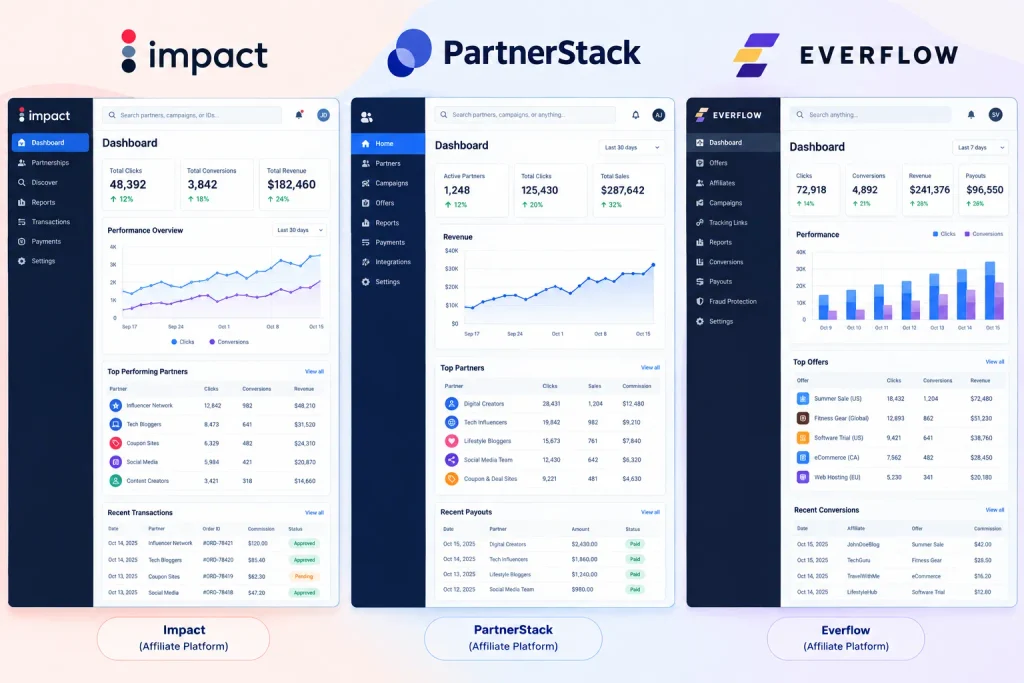
- Semrush: Semrush’s affiliate program pays $200 per sale plus $10 per free trial activation, according to SelfEmployed.com. However, Semrush’s own affiliate page now lists a range of $50–$300 per sale depending on product, managed through Impact, with a 120-day cookie. Best for SEO, blogging, and agency audiences.
- HubSpot: HubSpot’s affiliate program pays up to $1,000 per sale or 30% recurring commission for up to one year, according to SelfEmployed.com. HubSpot doubled its recurring rate to 30% for up to a year and extended its cookie to 180 days. Best for B2B marketing and sales content.
- GetResponse: GetResponse pays 40% recurring for 12 months at entry, rising to 50% after 50 sales and 60% after 100, via PartnerStack with no earning cap. Best for creators teaching email marketing.
Web Hosting and Website Builders
Hosting programs pay large bounties because one customer often stays for years.
- WP Engine: Affiliates earn a $200 minimum on most plans or 100% of the first month’s payment if higher ($100 on Lite), with a 180-day cookie. Best for WordPress and agency audiences.
- Kinsta: Kinsta pays a one-time bonus of $50 to $500 depending on the plan, plus 10% recurring for the lifetime of the client account. Best for developers and agencies.
- Shopify: Shopify’s program pays up to $150 on a first purchase with a 30-day cookie. Best for e-commerce educators.
Finance, Trading, and Investing Platforms
Finance programs pay some of the largest CPAs online, but they come with the strictest compliance rules. For example, eToro’s CPA reaches up to $400 per qualified trader, with the actual amount depending heavily on the trader’s region. Expect regional restrictions, mandatory risk warnings, and close review of your content. Best for established finance publishers.
Online Education and Course Platforms
Course platforms reward affiliates whose audiences want to sell their own knowledge. For example, Teachable pays 30% recurring for the first year of each referred creator’s subscription and runs the program through PartnerStack. Meanwhile, Kajabi restructured its program into tiers, and longtime partners lost the famous 30% lifetime rate, so verify current terms carefully.
Luxury and Premium Physical Goods
Premium physical goods often look high-ticket but pay low percentages, so only the highest-priced items clear the $100 bar. For example, Lectric eBikes pays 3% per sale through Impact, which means a $1,500 bike earns you $45. Luxury watches, high-end furniture, and premium travel can qualify at higher price points, but always calculate the actual dollar payout first.
What Are the Most Profitable High-Ticket Affiliate Niches?
SaaS, online business education, financial services, web hosting, and B2B services are the most profitable high-ticket affiliate niches in 2026, according to SelfEmployed.com. Each pays well for a structural reason:
- SaaS and software: Subscriptions create recurring revenue and high lifetime value.
- Online business education: Buyers expect a return on their investment, which justifies premium pricing.
- Financial services: One funded account can be worth thousands to a broker.
- Web hosting: Low churn means brands can afford large upfront bounties.
- B2B services: Company budgets support larger contracts than consumer wallets.
How Do You Sell High-Ticket Affiliate Products Without a Big Audience?
You sell high-ticket affiliate products by building trust with a small, targeted audience through deep content that answers buying questions. Let’s explore the four tactics that matter most.
Trust-First Content and Bottom-of-Funnel Keywords
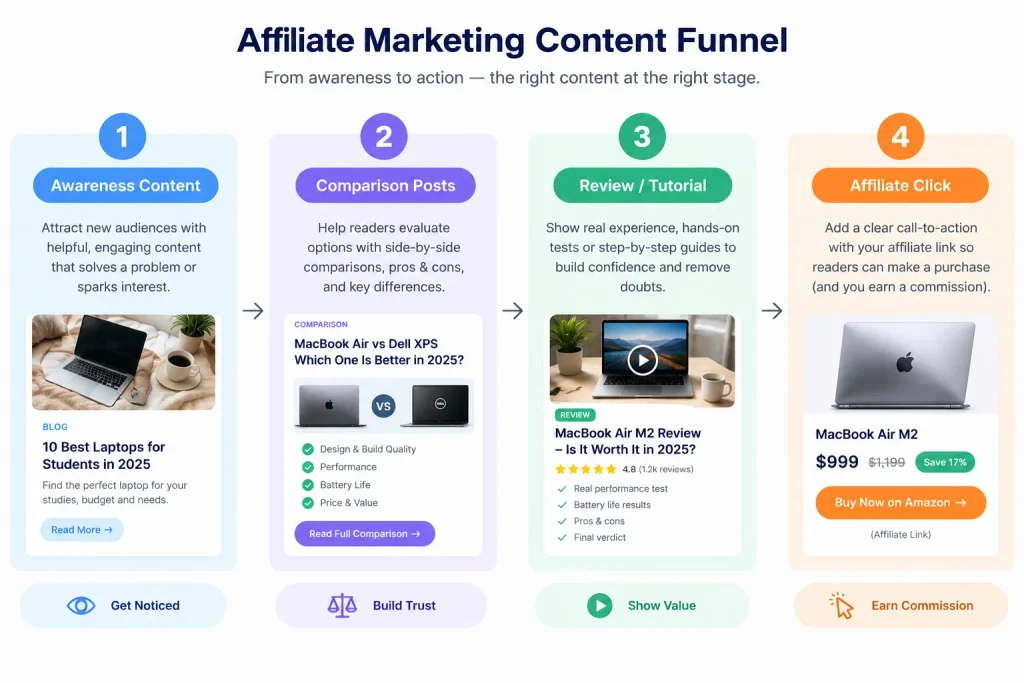
First, publish content that helps readers decide. In-depth reviews, tutorials, case studies, and comparisons convert far better than passing mentions. For example, a “HubSpot vs. Salesforce for small agencies” post targets someone close to buying.
Email Nurturing, Webinars, and Demos
Moreover, expensive purchases rarely happen on a first visit. An email sequence lets you keep educating readers until they’re ready to buy. For example, a five-day course on “setting up your first sales pipeline” can naturally showcase a CRM.
FTC Disclosure
Finally, always disclose clearly. The FTC requires a clear and conspicuous disclosure whenever you earn money from a recommendation. Place it before your first link, not buried in a footer.
How Much Can You Earn From High-Ticket Affiliate Marketing?
Your earnings depend on commission size, conversion rate, and whether payouts recur, but high-ticket programs let you reach the same income with far fewer sales. Let’s take a look at a worked example.
Worked Example: One-Time vs. Recurring
For example, compare two scenarios that both earn $900 per month:
- High-ticket: 3 sales × $300 = $900
- Low-ticket: 300 sales × $3 = $900
Now add recurring revenue. A 30% recurring commission on a $99/month plan pays $29.70 every month. Over 12 months, that’s $356.40 from one customer—more than three times a one-time $100 bounty. With lifetime terms and a two-year customer, it reaches $712.80.
Tools That Make the Work Easier
In addition, a lean toolkit covers most needs:
- Keyword research: Semrush, or free alternatives like Google Search Console and Google Keyword Planner.
- Comparison tables: TablePress for WordPress, or Google Sheets embeds.
- Email automation: GetResponse, Kit, or MailerLite’s free plan.
- Link tracking: Pretty Links, Lasso, or free UTM tags in Google Analytics 4.
What High-Ticket Affiliate Scams Should You Avoid?
High-ticket affiliate scams are schemes that charge you thousands of dollars to “join a system” or require you to recruit others, rather than paying you to sell a real product. Watch for these red flags:
- Pay-to-join “high-ticket” systems: Real programs are free to join.
- MLM recruitment: Income that depends on signing up other affiliates.
- Unverifiable income claims: Screenshots with no context or proof.
- High refund rates: Products that generate refunds also generate clawbacks.
For example, if a “coach” sells you a $3,000 package so you can earn commissions selling that same package, you are the customer, not the affiliate.
What’s Next: How to Get Approved and Land Your First High-Ticket Sale
The fastest path to a first high-ticket sale is building focused authority before applying, then working directly with affiliate managers. Follow this four-step plan:
- Build niche authority. Pick one niche and publish consistently for a defined audience. Beginners can start with how to start affiliate marketing with no money zero-cost beginner’s guide.
- Publish 5–10 trust pieces. Write reviews, tutorials, and comparisons before you apply.
- Apply to 2–3 programs. Choose programs that match your content and include links to your best work.
- Contact affiliate managers. Introduce yourself, share your content plan, and ask about exclusive offers.
Conclusion
High-ticket affiliate programs let you trade volume for value, earning $100 to $1,000+ per sale by promoting premium products to a trusted audience. The best programs combine strong payouts, long cookies, and quality products, with recurring models often delivering the most long-term income. SaaS, hosting, finance, education, and B2B services remain the most reliable niches.
Ultimately, success comes from fewer, better sales built on trust. Pick one niche, publish your first trust pieces this month, and apply to two programs that genuinely fit your readers.
Written by [Zee]
Disclaimer: I use AI tools to help outline and draft my guides. I check every fact against the official source linked in the article, and the opinions are my own. — Zee

1 thought on “Best High-Ticket Affiliate Programs (2026): Real Commissions Compared”